
Selecting the right ground mount solar racking system plays a big role in how efficient your solar panels will be, how much you spend on installation, and how easy your system is to manage over time. The three main types are fixed tilt, adjustable tilt, and tracking systems. Each has unique advantages and trade-offs that make them better suited to different projects.
Fixed Tilt Racks: Simple, Reliable, and Affordable
Fixed tilt systems keep solar panels in one set position, often aligned with the latitude of the site. These systems are straightforward and affordable, making them one of the most popular choices for residential and small commercial projects.
The benefits are clear. Fixed tilt racks are cost effective, easy to install, and require very little maintenance because they do not have moving parts. They are also reliable for the long term and work well in sites where simplicity is more important than optimization.
The main limitation is energy yield. Because the angle does not change throughout the year, these systems miss out on seasonal adjustments that could capture more sunlight in winter or summer.

Adjustable Tilt Racks: Flexible and Efficient
Adjustable tilt systems allow you to manually change the angle of your panels a few times per year. This feature makes them more efficient than fixed tilt systems, especially in areas where the sun’s angle changes significantly between seasons.
With a few simple adjustments, you can improve energy production by up to 20 to 30 percent compared to fixed systems. This option is an excellent balance between performance and simplicity. While the upfront cost is slightly higher, adjustable racks remain accessible for many homeowners and businesses, especially for those who want more control over efficiency without moving into automated technology.
Tracking Systems: Maximum Output with Added Complexity
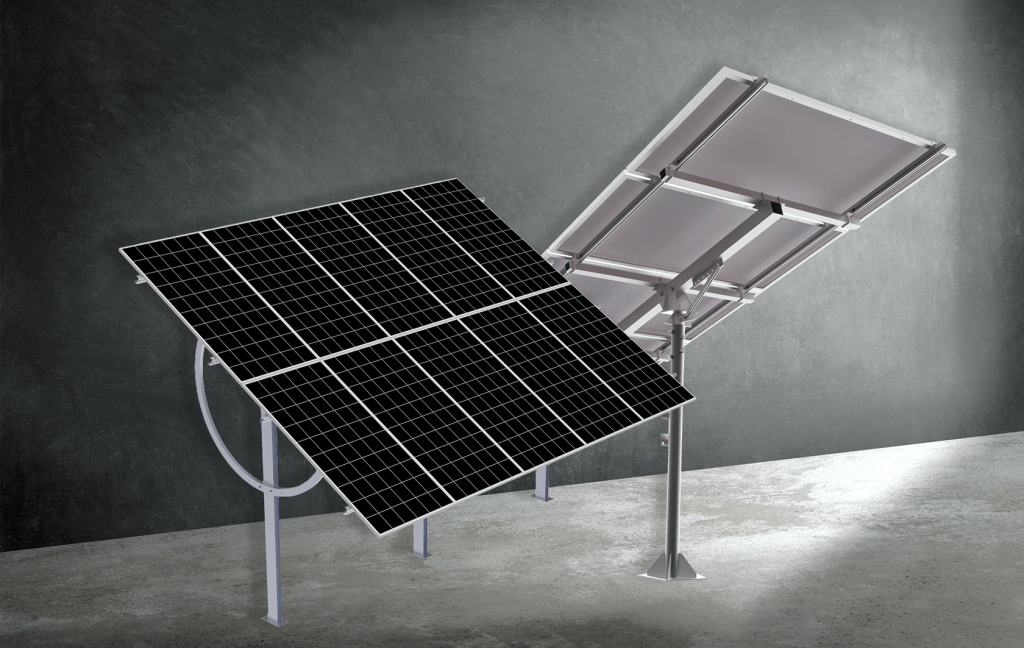
Tracking systems are designed to follow the sun automatically throughout the day. Single-axis trackers rotate panels from east to west, increasing energy production by about 20 to 25 percent compared to fixed systems. Dual-axis trackers go a step further, adjusting in two directions to capture even more sunlight and potentially increasing output by more than 30 percent depending on location.
The clear benefit is higher energy yield, which can make a big difference for large-scale solar projects or for sites where maximum performance is a priority. However, these systems come with higher costs, more complex installation, and greater maintenance needs due to moving parts. They also require more space so that solar panels do not shade one another when moving.
Quick Comparison
| Racking Type | Cost | Maintenance | Energy Yield | Best For |
|---|---|---|---|---|
| Fixed Tilt | Lowest | Very low | Baseline | Simple projects, budget installations |
| Adjustable Tilt | Moderate | Moderate | Seasonal boost | Homeowners, seasonal optimization |
| Tracking | Highest | High | Maximum | Utility-scale, high ROI projects |
How Elios Supports Your Solar Project
When it comes to choosing between fixed, adjustable, and tracking racking systems, the right equipment makes all the difference. At Elios, we provide complete solutions that bring strength, flexibility, and efficiency to ground-mounted solar projects.
Our racking systems are built for long-term reliability and simple installation, giving you options that fit both residential and commercial needs. We also supply the essential components that keep your system stable and secure in all conditions.
To maximize performance, our high-efficiency solar panels are designed to capture more sunlight and deliver consistent output year-round. When combined with the right racking setup, they help ensure your investment generates the best possible return.
With Elios, you can count on products that work together to create a solar system that is durable, adaptable, and built for lasting performance.